
A clearer path from opportunity to next step.
JobsAI brings job discovery, evidence-based fit analysis, contacts, and follow-ups into one personal workspace. Semantic AI search finds relevant context; deterministic logic keeps core decisions grounded in explicit criteria.
JobsAI is a private project and is not publicly available.
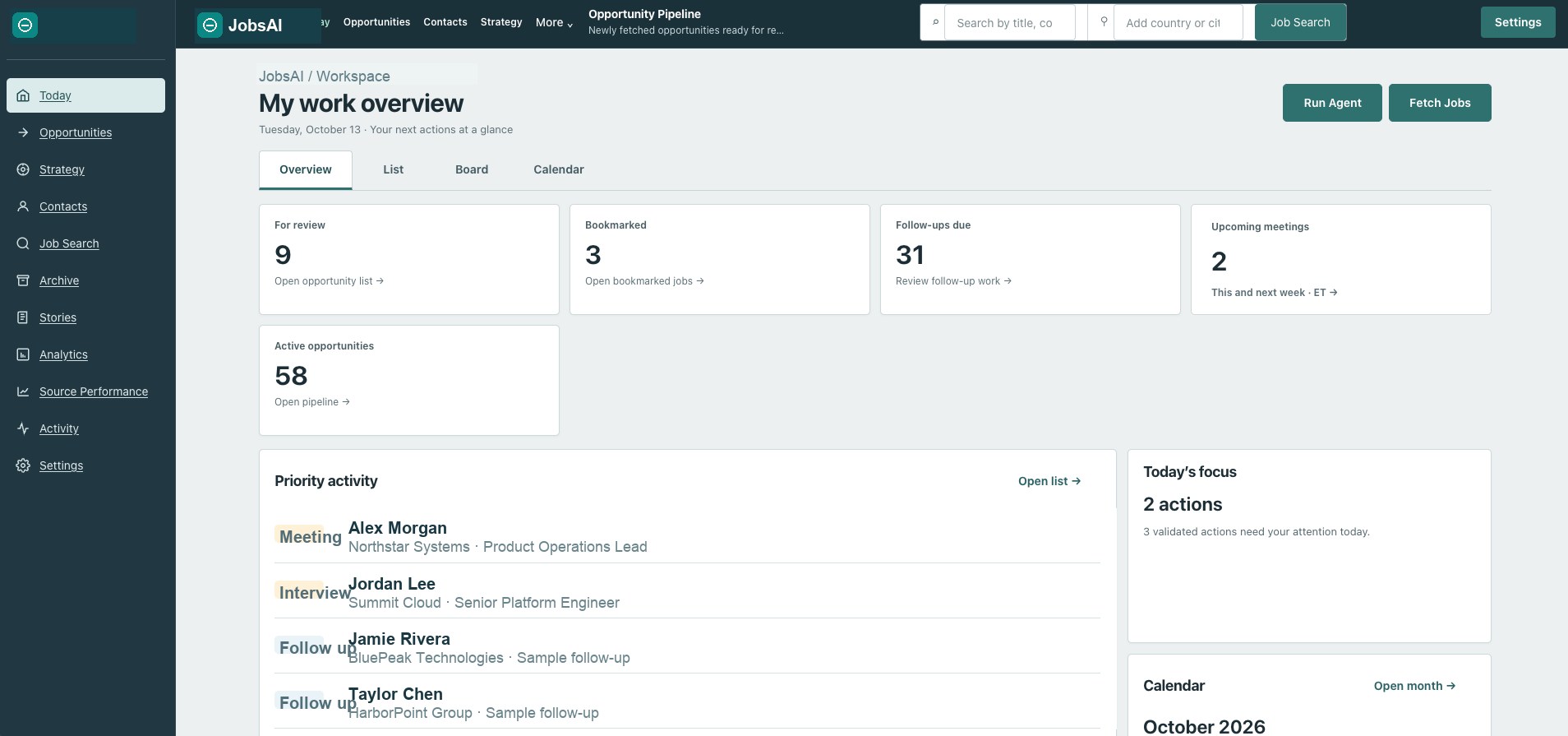
The product
Keep the entire search connected.
Relevant roles are only the beginning. JobsAI connects each opportunity to résumé evidence, company and contact research, interviews, calendar events, and follow-up actions. Review queues, list and board views, daily planning, and reporting make the work visible from discovery through decision.
What it does
Intelligence with an inspectable foundation.
Semantic AI search
Qdrant vector retrieval surfaces relevant passages from résumé and opportunity documents, even when the wording differs. Those passages provide source context for RAG analysis and tailored materials.
Deterministic logic
Explicit role criteria, résumé evidence, and saved career goals drive repeatable fit scoring. Optional AI analysis structures requirements and adds readable notes; the underlying criteria remain reviewable.
Opportunity pipeline
Bring roles together from configured employer boards, job APIs, and selected search sources, then move them through review and workflow stages.
CRM and planning
Link companies, people, networking history, interviews, meetings, and dated follow-ups to the opportunities that matter.
MCP integrations
Compatible AI clients can search and review opportunities, read CRM context, run scoring workflows, and prepare scheduling or application tasks.
Human-led action
Recommendations can be inspected and corrected before they shape the workflow. Messaging tools prepare and track outreach; messages are sent personally.
How it works
From signal to informed action.
- CollectGather and organize opportunities from configured sources.
- RetrieveUse semantic search to find relevant résumé and role evidence.
- EvaluateApply deterministic criteria, with optional AI fit analysis.
- Follow throughReview the result, connect people and events, and plan the next action.
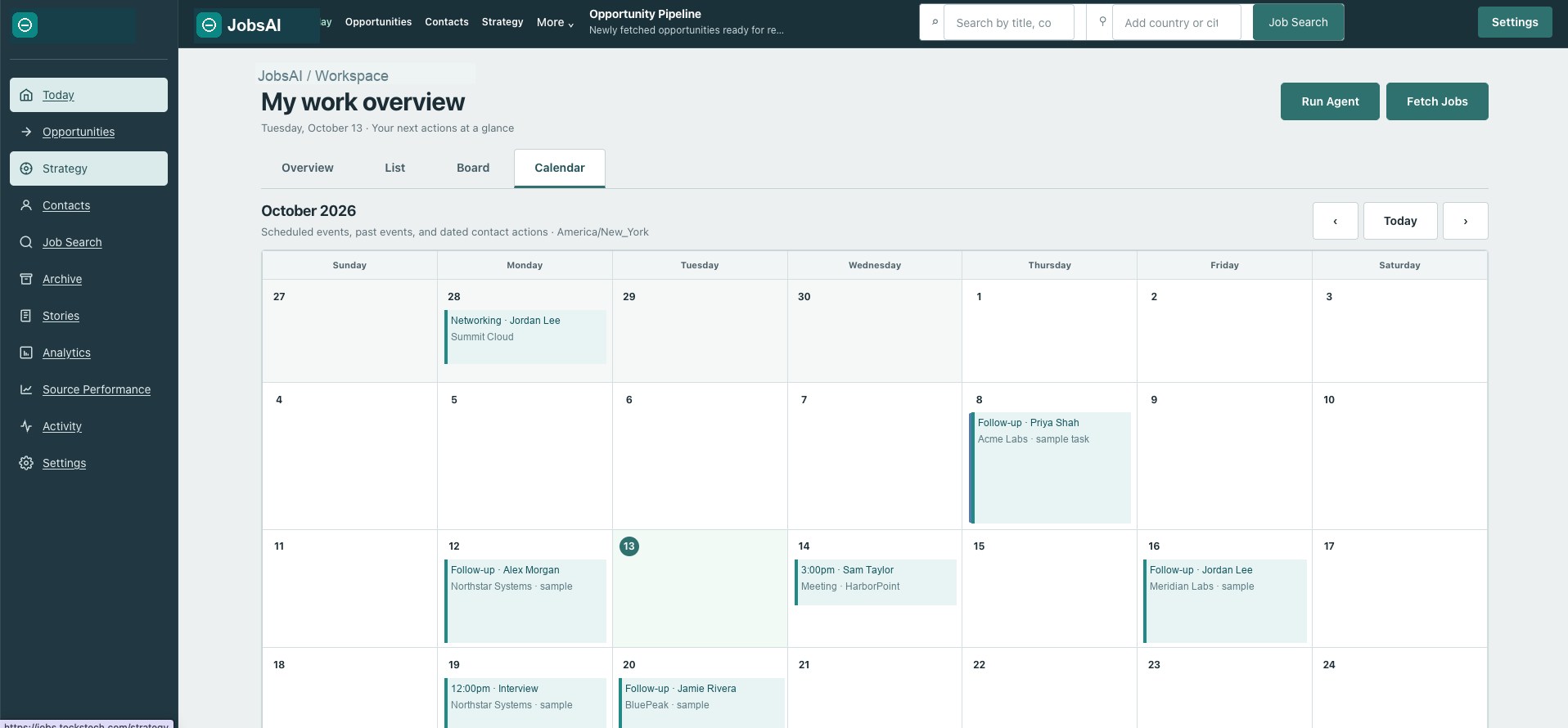
Behind the workspace
Built for a private, connected workflow.
Evidence and retrieval
Qdrant supports vector retrieval for résumé and opportunity passages. PostgreSQL stores opportunity, CRM, calendar, and workflow data.
Interfaces and processing
Containerized web and worker services support the dashboard and processing pipeline. An MCP server exposes selected tools to compatible assistants.
Hosting and recovery
A NAS-hosted production environment uses PostgreSQL as the primary database, with OCI and AWS standby environments. Database replication and retrieval data have separate recovery requirements.
This is a high-level view of a private implementation. Screenshots use fictional names, organizations, and activity.