
What Is an MCP Server (and How to Build One in Minutes)
If you’ve been exploring AI agents, you’ve probably seen the term MCP server pop up.
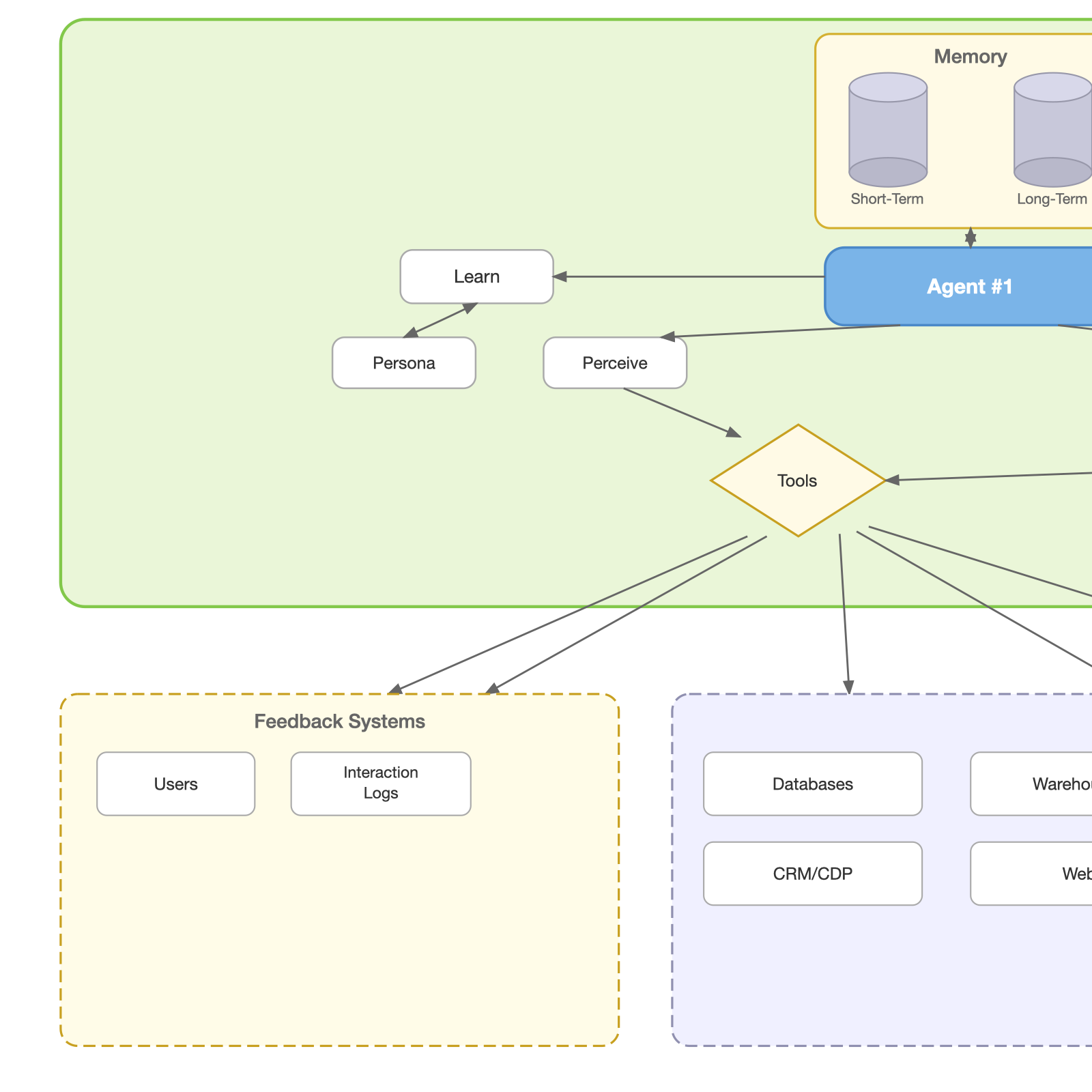
🧠 What Is an MCP Server?
MCP (Model Context Protocol) is a way to let AI models interact with tools, data, and systems in a structured, consistent way.
At a high level:
👉 An MCP server exposes tools (functions, APIs, data) 👉 An AI model calls those tools when needed 👉 The MCP layer standardizes how they talk
Think of it like this:
- The model = the portfolio manager
- The MCP server = the trading desk
- The protocol = the order ticket format between them
Instead of hardcoding logic into the AI, you give it capabilities it can call dynamically — like giving a portfolio manager a direct line to market data, order execution, and risk analytics on demand.
⚙️ Why MCP Matters
Without MCP:
- You build custom integrations every time (one-off scripts for each brokerage API, data feed, or screener)
- Logic gets duplicated across tools
- AI is limited to what’s inside the prompt
With MCP:
- Tools are reusable across models and workflows
- AI becomes action-oriented (not just text — it can fetch quotes, run screens, generate alerts)
- You separate reasoning from execution
👉 This is the foundation of modern AI agents.
🏗️ MCP Server Architecture (Simple Version)
An MCP server typically has:
- Tool definitions — what capabilities exist (fetch a quote, screen stocks, calculate risk)
- Execution layer — the code that actually runs each tool
- Interface — usually HTTP or JSON-RPC
Example flow:
- User asks: “What’s AAPL trading at right now?”
- Model decides: call the
fetch_stock_pricetool - MCP server executes it (hits a market data API)
- Returns structured data (ticker, price, change, volume)
- Model formats the answer for the user
🚀 Build a Simple MCP Server (Python)
Let’s create a minimal version using Python + FastAPI — themed around stock market tools.
Step 1: Install dependencies
pip install fastapi uvicornStep 2: Create the server
from fastapi import FastAPI
from pydantic import BaseModel

app = FastAPI()

# Define request structure
class MCPRequest(BaseModel):
    tool: str
    input: dict

# Example tools
def fetch_stock_price(ticker: str):
    # In production, this would hit a real API (e.g., Alpha Vantage, Polygon.io)
    mock_prices = {
        "AAPL": {"ticker": "AAPL", "price": 198.52, "change": +1.23, "volume": "54.2M"},
        "MSFT": {"ticker": "MSFT", "price": 415.80, "change": -0.87, "volume": "22.1M"},
        "TSLA": {"ticker": "TSLA", "price": 172.35, "change": +3.41, "volume": "98.7M"},
    }
    return mock_prices.get(ticker.upper(), {"error": f"Ticker {ticker} not found"})

def calculate_position_size(portfolio_value: float, risk_pct: float, entry: float, stop_loss: float):
    risk_amount = portfolio_value * (risk_pct / 100)
    risk_per_share = abs(entry - stop_loss)
    shares = int(risk_amount / risk_per_share) if risk_per_share > 0 else 0
    return {
        "shares": shares,
        "total_cost": round(shares * entry, 2),
        "max_loss": round(shares * risk_per_share, 2)
    }

# Tool registry
TOOLS = {
    "fetch_stock_price": fetch_stock_price,
    "calculate_position_size": calculate_position_size,
}

@app.post("/mcp")
def handle_mcp(req: MCPRequest):
    tool_name = req.tool
    tool_input = req.input

    if tool_name not in TOOLS:
        return {"error": "Tool not found"}

    result = TOOLS[tool_name](**tool_input)
    return {"output": result}
Step 3: Run the server
uvicorn main:app --reloadStep 4: Test it
Example request — fetch a stock price:
POST /mcp

{
  "tool": "fetch_stock_price",
  "input": {
    "ticker": "AAPL"
  }
}
Response:
{
  "output": {
    "ticker": "AAPL",
    "price": 198.52,
    "change": 1.23,
    "volume": "54.2M"
  }
}
Example request — calculate position size:
POST /mcp

{
  "tool": "calculate_position_size",
  "input": {
    "portfolio_value": 100000,
    "risk_pct": 1,
    "entry": 198.52,
    "stop_loss": 190.00
  }
}
Response:
{
  "output": {
    "shares": 117,
    "total_cost": 23226.84,
    "max_loss": 996.84
  }
}
🔌 How This Connects to AI
In a real setup:
- The AI model decides which tool to call based on the user’s question
- Your MCP server executes it
- The result is fed back to the model for formatting and reasoning
This is exactly how AI copilots, automation agents, and “coworker” tools actually do things — not just talk.
When a user says “Should I add to my TSLA position?”, the model can autonomously call fetch_stock_price, pull historical data, check portfolio exposure, calculate risk — and then synthesize an informed response. No hardcoded logic required.
🧩 Real-World Extensions
Once you have this working, you can plug in tools for a full stock research and trading workflow:
- 📊 Market data feeds — real-time quotes, historical OHLCV, options chains
- 📈 Technical analysis — RSI, MACD, moving averages, support/resistance levels
- 🏦 Portfolio tracking — positions, P&L, allocation percentages, sector exposure
- 📰 News & sentiment — earnings calls, SEC filings, analyst upgrades/downgrades
- ⚠️ Risk management — position sizing, stop-loss calculations, correlation checks
- 🤖 Alerts & automation — price triggers, earnings date reminders, rebalancing signals
👉 In a stock research agent, MCP becomes the control layer for:
fetch_stock_price— get current or historical pricesscreen_stocks— filter the market by criteria (P/E, dividend yield, sector)analyze_risk— calculate portfolio risk metrics and position sizinggenerate_watchlist_report— summarize your watchlist with key signals
⚠️ Common Mistakes
- Treating MCP as just another REST API — it’s a protocol for AI-tool interaction, not a generic endpoint
- Not separating tools cleanly — each tool should do one thing well (don’t bundle quote lookup and risk calc into one)
- Letting business logic leak into prompts — the model should reason; the tools should execute
- No logging or observability — you need to see what tools are being called, with what inputs, and what they return
🎯 Final Takeaway
An MCP server is not complicated. It’s just:
👉 A structured way to expose capabilities to AI
But that small shift is what turns:
❌ Chatbots that describe the market → into → ✅ Agents that read the tape and act on it